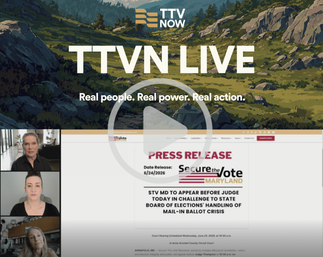
How the Rules Matter Before the Ballots Do Hi Friend, Elections don't start on Election Day. By the time you're standing in line, the candidates have been chosen, the procedures adopted, the deadlines set, and the laws passed—sometimes years earlier. It all becomes visible during elections, which is exactly what happened in Maryland when 500 thousand incorrect ballots were sent out by mistake. The actions following that incident is where citizens like Kate Sullivan, Director of Secure the Vote MD started looking at the procedures taken...and how they violated at least six laws. Pay attention because this could easily happen in your state, and every voter needs to be prepared on how to take action. What happened in Maryland? Kate, the person leading the fight, joined us on TTVN Live this week and walked us through one of the messiest primaries in recent memory—start to finish. The short version: in May, Maryland's mail-in ballots went out with the wrong party attached—Republicans getting Democratic ballots, Democrats getting Republican ones. The state pinned it on a third-party vendor that misapplied the party-affiliation code. Because the vendor couldn't say exactly which voters were hit, the state's fix was to mail replacement ballots to nearly half a million voters ahead of the June 23 primary. That, Sullivan says, is where the problems compounded. By her account, State Administrator of Elections, Jared DeMarinis, ordered the replacement wave without consulting the bipartisan five-member State Board of Elections—the body built for exactly this kind of oversight. The original ballots weren't spoiled. The board set a special canvass for July 6—the same day as certification—to work through those quarantined originals. They were quarantined. The decision was made to simply quarantine the ballots so canvassing teams can search through (what should be) secret ballots, versus following a protocol to ensure incorrect ballots were spoiled (not counted). The motives are unclear, but with the lack of trust in our election system as it is, the idea of "teams" being able to cherry pick and then determine which ballots will be counted should be alarming to all voters. An original in the wrong party style can be rejected. And the guidance, Sullivan says, stops there: no requirement to tell the voter, no window to fix it. You cast a ballot, it gets tossed, and you never find out. This group took action...because they know the local laws. That's what pushed Sullivan's group to act. The citizen-led organization filed for an emergency temporary restraining order against the State Board of Elections, citing six violated laws, arguing the July 6 plan would reject lawfully cast ballots while leaving the voters who cast them in the dark. The Maryland State Board of Elections created this crisis, and Maryland voters deserve answers, transparency, and compliance with the law. This case is about ensuring that every lawful vote is handled according to Maryland statute and that voters are not left guessing whether their ballots will count. - Kate Sullivan, Director of Secure the Vote MDAnd the court quickly took it seriously: Sullivan says the judge received their TRO and personally called their attorney almost immediately—close to unheard of for a filing like this. Because they filed when they did, with the statute citations already in hand, the court couldn't slow-walk it: the judge set an emergency hearing for today at 10:30 a.m. ET—before the July 6 canvass, not after. So the suit asks for one core remedy: that every affected voter be contacted before certification, not after. Sullivan says it cites six separate violations of state law, including the 2023 statute establishing that the first ballot received is the one that counts, which she argues the state is now ignoring to dig out of its own hole. None of that movement happens on its own. Boards certify on schedule and quarantined ballots get sorted quietly...unless someone forces the question. Sullivan's team forced it. That's the difference a handful of prepared citizens made. They turned a done deal into a live legal question with a judge's attention on it. Wait for the headline, and that hearing never gets scheduled. Watch the full story on this week's True the Vote Live — the errors, the lawsuit, and what she's expecting from the judge: https://rumble.com/v7bpn82-ttv-now-live.html Most "Election Day problems" aren't that. Here's the misconception that trips people up: that election problems begin when voting begins. They rarely do. Most disputes are really arguments about procedures, authority, deadlines, and requirements that were locked in long before anyone voted—exactly like Maryland's. When you don't know those laws, it's almost impossible to tell what you're actually looking at: - A clear violation of the law
- A gap the law never addressed
- A policy you happen to disagree with
- A plain administrative mistake
Each one calls for a different response. Mistake them for each other and you burn your effort in the wrong place—or you cry foul where there's no foul and lose credibility for the times it counts. The bill in committee today is the rule tomorrow. And you can use it. You don't have to like a law to need to understand it. A bill sitting quietly in committee right now can become the standard election officials are bound to follow next cycle. A change to voter registration. A new ballot-curing requirement. A fresh transparency rule—or a new limit on citizen oversight. A rewritten challenge process. By the time most people feel the effects, the legislation behind them has been on the books for months. Watching legislation isn't a side project. It's the foundation everything else sits on. This is why we built LegiTrack. LegiTrack exists to let you see what's coming while you can still do something about it—not after it's already tomorrow's headline. Whether a bill strengthens transparency or guts it, expands oversight or limits it, reshapes registration or rewrites how elections are run, step one is always the same: knowing it exists. When you know the rules, you ask sharper questions. When you ask sharper questions, you can hold officials to account. And when you understand how the process works, you can weigh in before the rules are finalized—which is the only point at which weighing in actually changes anything. Don't wait for the headline. The groundwork for the next election is being laid right now, in statehouses across the country. Thousands of bills. Hundreds of hearings. Plenty of changes that'll never make national news but will absolutely decide how your state runs its elections. Give it a few minutes a week. The fine print only has power when no one's reading it. Open LegiTrack and start tracking the bills shaping your state.  Access the full bill tracker Access the full bill tracker |
Ever onward - |