Citizenship Is a State of Mind..?

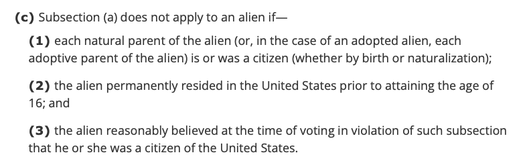
Hi Friend, Federal law makes it a crime for a non-citizen to vote in a federal election. Then, a few lines later, it explains when that crime doesn't count. That's 18 U.S.C. § 611. Subsection (c), added in 2000, says the ban doesn't apply if the person's parents were citizens, they lived here before turning 16, and they reasonably believed they were a citizen when they voted.
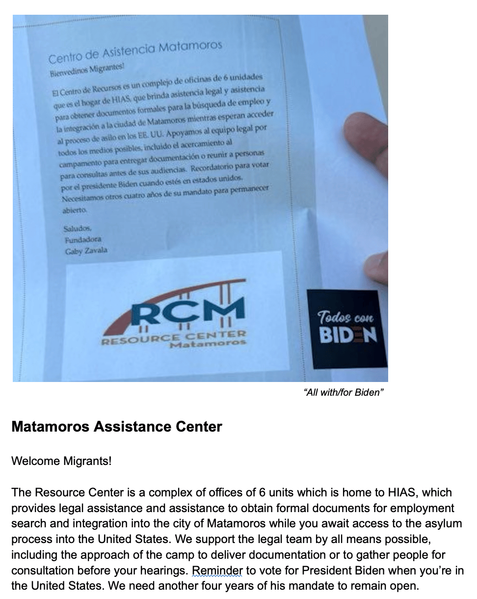
Belief. Written into the statute's own escape hatch. That's where the 611 Project got its name. It's also why we've spent years tracing how citizenship actually gets established — the DMVs, the public agencies, the rolls themselves. We're bringing it back to the forefront, and this phase takes all of us. Most noncitizens truly don't know betterIn 2024, this letter was shared with True the Vote after being received from a migrant at the Texas border. Read the underlined sentence: “Remember to vote for President Biden when you’re in the United States.” There’s an important point here that can get lost in the politics: noncitizens may be receiving confusing or outright incorrect information about voting eligibility. The reason is unconfirmed, although strongly implied:
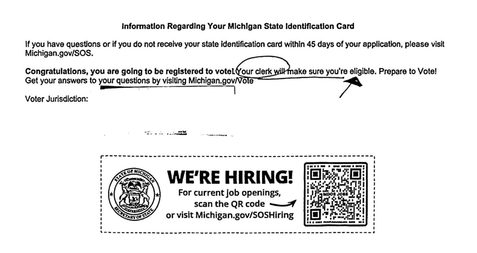
Voting in federal elections is reserved for U.S. citizens. But if someone entering the country is being told simply to “remember to vote” without being told when and under what circumstances they would legally become eligible, how are they supposed to know the difference? One could argue that they should know the law before they get here, but we need to remember that these letters are — by all appearances — being passed out by individuals/groups who know and are supposed to be adhering to the law. Most newcomers to any border in the world wouldn't be the wiser. We saw a similar sentiment in the "congratulations" notice noncitizens receive in Michigan:
This is why our Letters to Noncitizens aren't accusatory. They're educational: You may be eligible someday. You may not be eligible today. Know the law before you register or vote. Protecting elections also means protecting people from making a mistake that can carry serious consequences. Start where you livePicture the moment someone registers to vote in your county. There's a form. There's a box beside the words “Are you a citizen of the United States?” The applicant checks yes, because they may have been told they are. What happens next? Does someone independently verify that answer? If so, who does it, what information do they use, and what happens if the information can't be verified? Every state has rules and procedures governing voter registration. Your task in the 611 Project is simple: Find out what yours actually says. Four questions:
Talk to your clerk. Get the written procedures. Find the statute. Document the answers. We're not asking you to assume something is wrong. We're asking you to find out how it works — and whether the safeguard on paper is a safeguard in practice. Sometimes it will be. That's worth knowing too. Help us reach more communitiesWe're expanding our Letters to Noncitizens resources — clear information about citizenship and voting eligibility, for people who deserve a straight answer before they make a mistake that can cost them everything. Right now, those materials don't exist in enough languages. We need volunteers fluent in:
If you speak one of these — or you know someone who does — please help us distribute this letter more widely. Reply to this newsletter and we'll send you the template! This is citizen oversightResearch. Ask. Document. Translate. Share. The statute may say that beliefs is enough, but we can do more to protect those who have been victimized by the system they came here to grow from. There is a place for everyone in this effort, and sometimes the most important work starts with one citizen willing to ask one good question.Ever Onward!
“Two are better than one… And if one prevail against him, two shall withstand him; and a threefold cord is not quickly broken.” - Ecclesiastes 4:9–12
|