The Cost of Unequal Enforcement Hi Friend, At True the Vote, one of our core missions is education which often means taking a step back to understand the events that brought us here. History provides context, legislation creates the framework, and court decisions establish precedent. By understanding how yesterday shaped today, we can better appreciate how the decisions being made today will shape tomorrow. Some backgroundIn 2013, Congress held hearings into something most Americans never imagined possible: a federal agency admitting it had singled out organizations because of their names and beliefs. The Internal Revenue Service acknowledged that when certain groups applied for tax-exempt status, it had flagged them based on what they were called and what they stood for—not on anything they had actually done: Independent Sector is deeply troubled that applications for tax exempt status were singled out by IRS personnel for additional scrutiny based on the applying organizations’ names or the nature of their exempt activities. The IRS’s proper role in approving, and subsequently regulating, exempt organizations is not determining the worthiness of their cause, but their compliance with the law. After years of harassment, unequal treatment, fines, and government investigations that extended beyond the scope of their tax-exempt applications, the organizations under scrutiny could have given up. The easier path would have been to throw up their hands, say, "Forget it," and walk away. But they didn't. Catherine was amongst the group of citizens who chose to do the hard thing: fight. 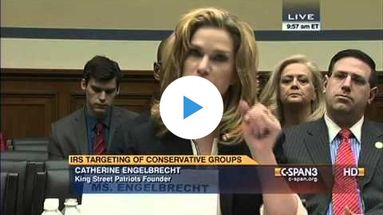 Regardless of political affiliation, one principle should unite Americans: Government agencies should apply the law—not political preferences. Here's what happened, how this applies today within LegiTrack, and which bills we're tracking this week.
In case you missed it:For roughly 18 months beginning in 2010, employees in the IRS Determinations Unit flagged applications for tax-exempt status using keywords like "Tea Party," "Patriots," and "9/12"—later expanding to groups focused on government spending, debt, taxes, and the Constitution. What surfaced at the 2013 hearings was straightforward: - The IRS acknowledged that its screening had been inappropriate.
- The Inspector General confirmed the criteria were improper—based on names and beliefs, not activities.
- Some organizations waited nearly three years for a decision, and dozens faced improper requests for information like donor lists.
- Congress spent months investigating how it happened and who knew.
- And Americans across the spectrum asked one question: "Can government be trusted to treat everyone equally?"
So why revisit a hearing from more than a decade ago? Because the question never changed. While the agency may be different, the issue isn't.
When oversight becomes precedent...The IRS controversy didn't end when the hearings adjourned. What Congress exposed, the courts took up—years of litigation, rulings, and settlements that reinforced longstanding constitutional protections: the First Amendment rights to free speech and association, and the principle that government cannot selectively burden citizens for their political views. Court decisions don't just settle a single dispute—they become part of the framework that guides future conduct. Agencies weigh those rulings when writing policy, legislators draft with those guardrails in mind, and citizens gain clearer standards for challenging overreach. Oversight revealed the problem. The courts helped establish the principles that make similar conduct harder to justify. It's a reminder that legislation, oversight, and the judiciary each play a distinct but essential role in preserving constitutional government—today's bills become tomorrow's laws, and those laws may one day be tested in court, shaping the precedents that protect future generations. The same principle applies to elections:This is where LegiTrack comes in. Election officials wield enormous authority over voter rolls, ballots, investigations, certification, and public records. Whether those powers are exercised fairly—or even appear to be exercised fairly—determines public confidence. The IRS story wasn't ultimately about tax forms. It was about whether a government body could be trusted to treat citizens the same regardless of their views. Elections raise the same test, just in a different arena. When a voter is added or removed from a roll, when a ballot is handled and stored, when a records request is answered or delayed, the question underneath is identical: is the law being applied evenly? Trust is created by transparent laws that apply equally to everyone. Every week, legislatures introduce, amend, and debate bills that determine how elections are administered. Some move quickly. Others remain active for months before becoming law—or becoming the subject of litigation. LegiTrack follows them throughout that process because the final vote isn't always the most important part of the story. Some expand or limit oversight, increase or reduce public confidence, or raise new questions entirely. Here's what's on our radar (and a few you may have missed):1. Federal — H.R. 9577, the "COCOA-VIP Act" (introduced July 1, 2026) · Observer access. Amends the Help America Vote Act to affirm congressional election observers' access to federal primary elections. Watch: How Congress defines oversight—and who is entitled to observe federal elections. 2. New Jersey — S 4523 (Introduced June 25, 2026 but sitting) · Audits and citizenship verification. Requires the Secretary of State and Motor Vehicle Commission to audit voter registrations going forward, and requires proof of citizenship to register at the MVC. Watch: How the state balances election security with standards for verifying voter eligibility. Right now is a great time to reach out to your state reps to be heard. 3. Michigan — SB 1087 (Introduced) · Money in elections. Would revoke the ability of limited liability companies to spend money supporting or opposing candidates, parties, committees, or ballot initiatives; such expenditures would be invalid and subject to legal action, including possible dissolution, with carve-outs for existing obligations and certain media activities. Tie-barred with SB 1085 and SB 1086, so it takes effect only if those pass. Watch: Where lawmakers draw the line on political spending and who may participate in elections financially. 4. Federal — S 4774, the "FAIR Elections Act of 2026" (introduced June 10, 2026 and also sitting) · Voter-roll integrity. Amends voter registration law to bar removing names from the rolls based on unverified databases, and prohibits false AI-generated election media. Watch: How the bill defines "reliable" voter-roll maintenance while limiting the use of certain data sources. 5. New York — S 10563 (First Chamber) · Ballot handling. Requires a notice on all mail-return ballots explaining timely return methods, including information on drop boxes. Watch: How election officials communicate ballot return requirements and the role of voter education in ballot administration. Keep an eye out for language edits and curveballs as it progresses forward.  Access the full bill tracker Access the full bill tracker |
History rarely repeats itself in exactly the same way, but it often asks the same questions. Should government operate transparently? Should laws be applied equally? Should citizens be able to verify what government is doing? Those aren't partisan questions. They're constitutional ones. We'll keep watching the legislation that helps answer them.  Subscribe and stay connected. Subscribe and stay connected. |
Ever onward - |